
Description
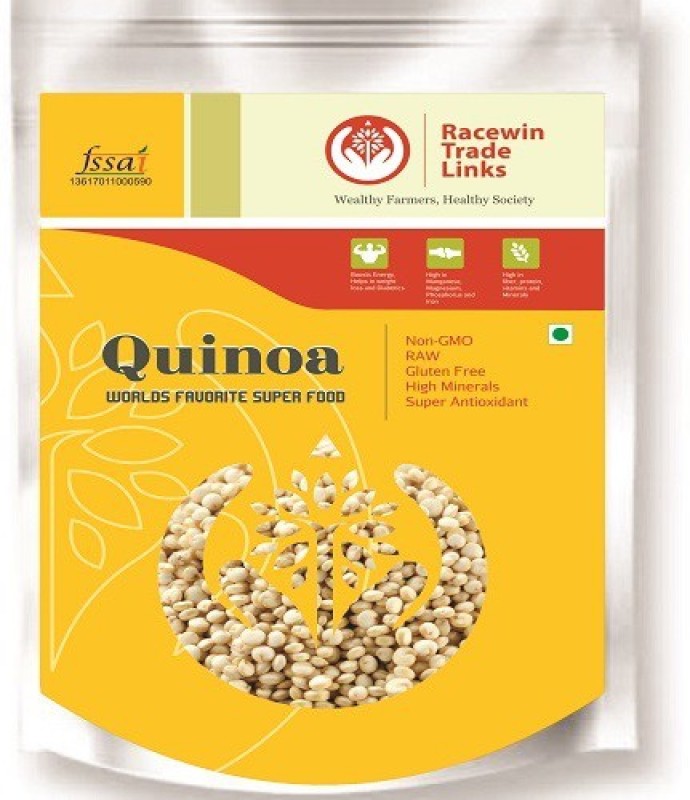
Quinoa (/?ki?nw??/ or /k??no?.?/, from Quechua kinwa or kinuwa)[2] is the common name for Chenopodium quinoa, a flowering plant in the amaranth family Amaranthaceae. It is a herbaceous annual plant grown as a grain crop primarily for its edible seeds. Because it is not a grass, it is a pseudocereal rather than a true cereal. Quinoa is closely related to the edible plants beetroot, spinach, and amaranth (Amaranthus spp.), another pseudocereal which it closely resembles. After harvest, the seeds are processed to remove the outer coating that contains bitter-tasting saponins. They are gluten-free. Generally, the seeds are cooked the same way as rice and can be used in a wide range of dishes. The leaves are sometimes eaten as a leaf vegetable, much like amaranth, but commercial availability of quinoa greens is limited. When cooked, the nutrient composition is comparable to common cereals like wheat and rice, supplying a moderate amount of dietary fiber and minerals. Quinoa is a complete source of protein, and contains all nine essential amino acids.[3][4] The Food and Agriculture Organization of the United Nations declared 2013 to be the “International Year of Quinoa”.[5] Quinoa originated in the Andean region of Peru, Bolivia, Ecuador, Colombia and Chile,[6] and was domesticated 3,000 to 4,000 years ago for human consumption in the Lake Titicaca basin of Peru and Bolivia, though archaeological evidence shows a non-domesticated association with pastoral herding 5,200 to 7,000 years ago.[7]
Reviews
There are no reviews yet.