
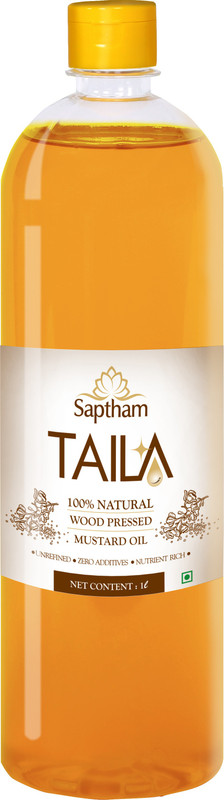
Description
The term mustard oil is used for two different oils that are made from mustard seeds: A fatty vegetable oil resulting from pressing the seeds, An essential oil resulting from grinding the seeds, mixing them with water, and extracting the resulting volatile oil by distillation. The distinctive pungent taste, characteristic of all plants in the mustard (Brassicaceae) family (for example, cabbage, cauliflower, turnip, radish, horseradish, or wasabi). It is often used for cooking in North India, Eastern India, Nepal, Bangladesh, and Pakistan. In Bengal, Odisha, Assam, Meghalaya, Manipur, and Nepal, it is the traditionally preferred oil for cooking. The oil makes up about 30% of the mustard seeds. It can be produced from black mustard (Brassica nigra), brown Indian mustard (B. juncea), and white mustard. The seeds are sun dried first, cleaned and then put in to the Gaana or the Marachekku. The mustard oil is extracted at room temperature. The wood absorbs heat and maintains atmospheric temperature in oil extraction. The raw material of mustard seeds is ground in to a paste and is pressed with the heavy wood mill until it expels the oil. This extracted oil is now stored in the barrels and is kept in the sunlight. Once the sediments settle, it is then filtered and finally sent for packing.
Reviews
There are no reviews yet.